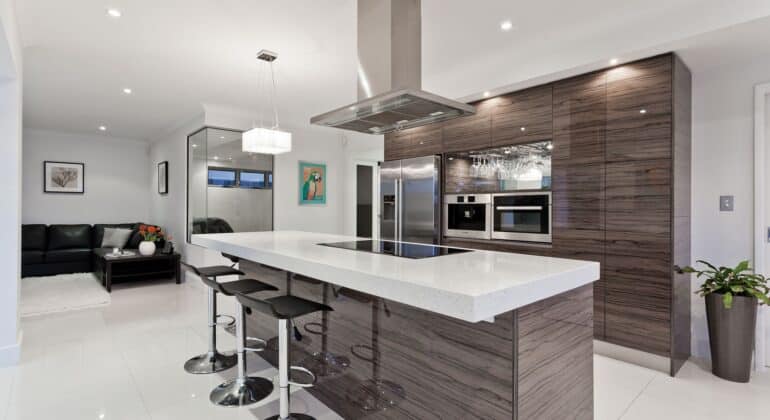

Open walls and flowing spaces look beautiful in photos. But living in an open-concept home in Florida means dealing with heat, humidity, and afternoon thunderstorms. What works in Colorado doesn’t always work here. Your climate demands different thinking about how spaces connect and function.
The Hyde Group LLC builds custom homes throughout the Treasure Coast, where open layouts need to handle Florida’s unique conditions. Creating a comfortable open concept home design requires more than knocking down walls. It demands careful planning around airflow, light, and how spaces actually work in this environment.
Understanding Open Layouts in Florida’s Climate
Open floor plans remove barriers between living areas. Your main floor flows from one space to another without walls chopping things up. Sounds simple enough. The challenge comes when Florida’s climate enters the picture.
Heat rises and moves through open spaces differently than through closed rooms. Humidity affects how air circulates. Natural light that feels pleasant in winter can overheat spaces in summer. These aren’t small details. They affect your comfort every single day.
Smart open layouts work with Florida’s climate instead of fighting it. That means thinking about how air moves, where the sun hits at different times, and how to control temperature across large connected spaces. Custom home builders who understand Florida design create zones within open layouts that balance openness with climate control.
Airflow and Temperature Control
Air conditioning is expensive in Florida. Your HVAC system works harder when cooling one large open space versus several smaller rooms. But open layouts can actually help with airflow if designed properly.
Natural ventilation matters more than most people realize. When you position windows and doors to catch prevailing breezes, air moves through your space without running the AC constantly. Cross-ventilation works better in open layouts because there are fewer walls blocking airflow.
Key airflow considerations include:
- Window placement that captures coastal breezes
- Ceiling fan positioning for maximum air movement
- HVAC zoning to control different areas independently
- Return air placement that works with open floor plans
- Strategic use of partial walls that guide airflow
The trick is balancing openness with temperature zones. You don’t want your AC fighting to cool one massive space. Creating zones within open layouts means your living area might stay cooler while the dining space runs slightly warmer. This saves energy without sacrificing the open feel.
Natural Light Management
Florida sunshine is intense. Beautiful, yes. But also capable of turning your living room into a greenhouse if you’re not careful about how light enters your space.
Open layouts typically bring in more natural light than traditional floor plans. All that glass and fewer interior walls mean sunlight travels farther into your home. This works wonderfully in the morning. By afternoon, it can become a problem.
Strategic window placement makes the difference. North-facing windows bring consistent light without direct sun exposure. East-facing glass captures morning light that’s gentler than afternoon rays. South and west exposures need more careful planning because that’s where heat builds up.
Your custom builder should consider seasonal sun angles. The summer sun sits higher in the sky than the winter sun. Overhangs and roof designs that block summer rays while allowing winter warmth require precise planning. Floor-to-ceiling windows look dramatic but also let in tremendous heat. Mixing window sizes gives you natural light without the greenhouse effect.
Ceiling Height Strategies
High ceilings feel natural in open layouts. They make spaces feel larger and help with heat management since hot air rises away from living areas. But ceiling height affects more than just aesthetics.
In Florida’s climate, higher ceilings mean your AC has more cubic footage to cool. That costs money. The sweet spot for open layouts usually falls between 10 and 12 feet. High enough to feel spacious, not so high that you’re cooling empty air.
Vaulted or coffered ceilings add architectural interest while maintaining practical heights. The Hyde Group LLC works with clients to find ceiling heights that balance aesthetics with Florida’s climate realities.
Ceiling fans become more important in open layouts with higher ceilings. They push conditioned air back down to living levels instead of letting it collect uselessly overhead. Fan placement needs careful thought. Too few fans and you have dead spots. Too many, and the space feels cluttered.
Noise Control Without Walls
Here’s what nobody mentions about open concept home design until you’re living in one: sound travels. Conversations from one area interrupt activities in another. Without walls to absorb sound, open layouts can feel chaotic.
Florida homes often use tile or luxury vinyl flooring because carpet doesn’t handle humidity well. Hard surfaces look great but reflect sound instead of absorbing it.
Soft furnishings become your sound management tools:
- Area rugs break up hard floor expanses
- Upholstered furniture dampens sound reflection
- Ceiling treatments like coffered designs reduce echo
- Strategic furniture placement creates acoustic breaks
Some noise you can’t eliminate in open layouts. The dishwasher runs while you watch TV. Kids playing in one area affect the whole space. Understanding this tradeoff matters before committing to open concept home design. It works great for some families. Others prefer more acoustic separation.
Creating Zones Without Walls
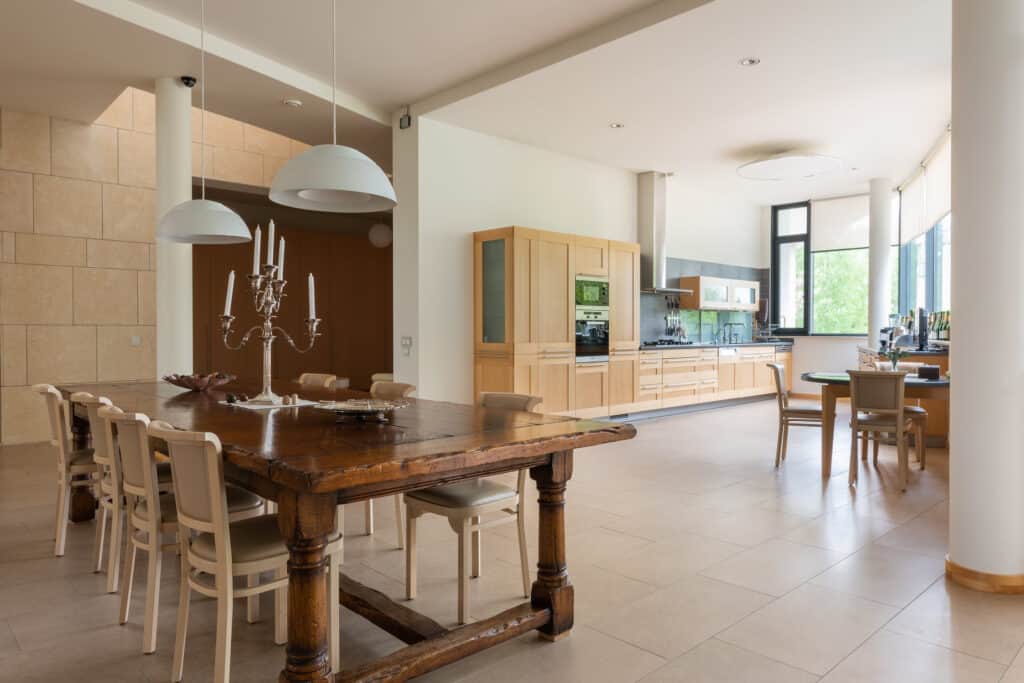
Open doesn’t mean one undifferentiated space. Good design creates distinct zones within the overall layout. You need a definition between areas without closing them off completely.
Furniture arrangement is your first zoning tool. A sofa facing away from the dining area creates a subtle boundary. Area rugs define spaces visually. Different lighting levels separate zones without physical barriers.
Partial walls and columns add structure without blocking sightlines or airflow. A half wall between the living and dining areas gives you separation while maintaining the open feel.
Flooring transitions help define spaces. Tile in one area transitioning to wood in another creates a visual boundary. Custom home renovations often involve opening up existing floor plans. The best results come from thoughtful zoning that maintains function while creating flow.
Practical Considerations for Stuart Homes
Building an open concept home design in Stuart means working with specific local conditions. Coastal humidity affects material choices. Hurricane considerations impact window and door specifications.
Opening up spaces affects your home’s structural integrity. Load-bearing walls need proper support through beams and columns. Your custom builder evaluates these factors during planning.
Indoor-outdoor connections work particularly well with open layouts in Florida. Large sliding glass doors extend your living space to covered patios. Screen enclosures give you bug-free enjoyment of fresh air. Combined with an open concept home design inside, this creates enormous usable space for entertaining and daily living.
Making Open Concepts Work for You
Open concept home design isn’t all or nothing. You can open up the main living areas while keeping other spaces separate. You can create mostly open layouts with strategic walls that serve important functions.
The key is understanding what you’re trying to achieve. Do you want the whole family together? Open layouts excel at this. Need quiet workspaces? You’ll want some separation built into the design. Florida’s climate adds specific requirements, but it doesn’t prevent open layouts. It just demands smarter execution.
Working with The Hyde Group LLC means your open concept home design accounts for South Florida’s conditions from the start. Temperature management, humidity control, and hurricane resistance all factor into how spaces connect and flow. The result is an open layout that actually works for daily life in Florida.
Ready to discuss open-concept options for your home in Stuart or around South Florida? Contact us to explore how custom design can create the flow you want with the comfort Florida demands.
Frequently Asked Questions
How does open-concept design affect cooling costs in Florida?
Open concept home design can increase or decrease cooling costs depending on execution. Large, undivided spaces require more energy to cool. However, proper HVAC zoning, strategic window placement, and ceiling fans can make open layouts efficient. Your builder should design multiple temperature zones and position windows to minimize direct sun exposure.
Can you add an open concept layout to an existing Florida home?
Yes, custom home renovations can open up existing floor plans. The process requires structural evaluation since many walls are load-bearing. Your builder determines which walls can be removed and what support beams are needed. Florida building codes affect how spaces can be opened up.
What’s the best ceiling height for open concept homes in Florida?
Most open concept home design in Florida works best with ceilings between 10 and 12 feet. This height creates a spacious feel while managing cooling costs. Vaulted or coffered ceilings add visual interest at practical heights. Your specific design and HVAC system influence the ideal ceiling height.
How do you control noise in open floor plans?
Sound management in open concept home design relies on soft materials and strategic design. Area rugs absorb floor-level noise. Upholstered furniture dampens sound reflection. Ceiling treatments like coffered designs reduce echo from above. Partial walls and furniture placement create acoustic breaks without closing off spaces.